 Photo: londondrum.com
Useful things to know before your visit
Address: Hunterian Museum, Royal College of Surgeons, 38-43 Lincoln’s Inn Fields WC2A 3PE. Telephone: 0207 869 6560. Website: hunterianmuseum.org
How much do the tickets cost?
The Hunterian Museum is free, but temporary exhibitions might cost extra.
What are the opening hours?
Opening times are 10am to 5pm (Tue-Sat). Last entry is 1 hour before closing time.
How much time do you need?
A typical visit to the Hunterian Museum takes 45 to 60 minutes.
Which buses go to the Hunterian Museum?
Bus routes 1, 11, 23, 26, 59, 68, 76, 91, 168, 171, 172, 188, 243, 521 and X68 all stop close by.
Which is the closest train station?
The nearest station is Holborn, which connects with the Central and Piccadilly lines. You can walk the ¼ mile to the Hunterian Museum in about 4 minutes.
Which other attractions are nearby?
These attractions are all within 15 minutes walk of the Hunterian Museum: Sir John Soane’s Museum, Royal Courts of Justice, Lincoln’s Inn, Temple Bar, Staple Inn, Courtauld Gallery, Temple Church, Transport Museum, Dr. Johnson’s House, Covent Garden, British Museum and Cleopatra’s Needle.
 Twitter
 Facebook
 WhatsApp
 Email
My review of the Hunterian Museum
John Hunter served as the personal surgeon of King George III, set up his own an anatomy school, and by the end of his life had assembled a collection of over 14,000 specimens, skeletons, teeth and tumours from humans and the zoo – 2,000 of which are on display at this museum.
It would be fair to say that his methods of collection weren’t exactly aligned with modern day sensibilities as he was happy to dissect and experiment on live animals, and sourced his corpses from wherever he could find them – even paying body-snatchers to take them straight from the graveyard. The most notorious story has him snaffling the skeleton of ‘Irish giant’ Charles Byrne after bribing a member of his funeral party to fill his coffin with rocks.
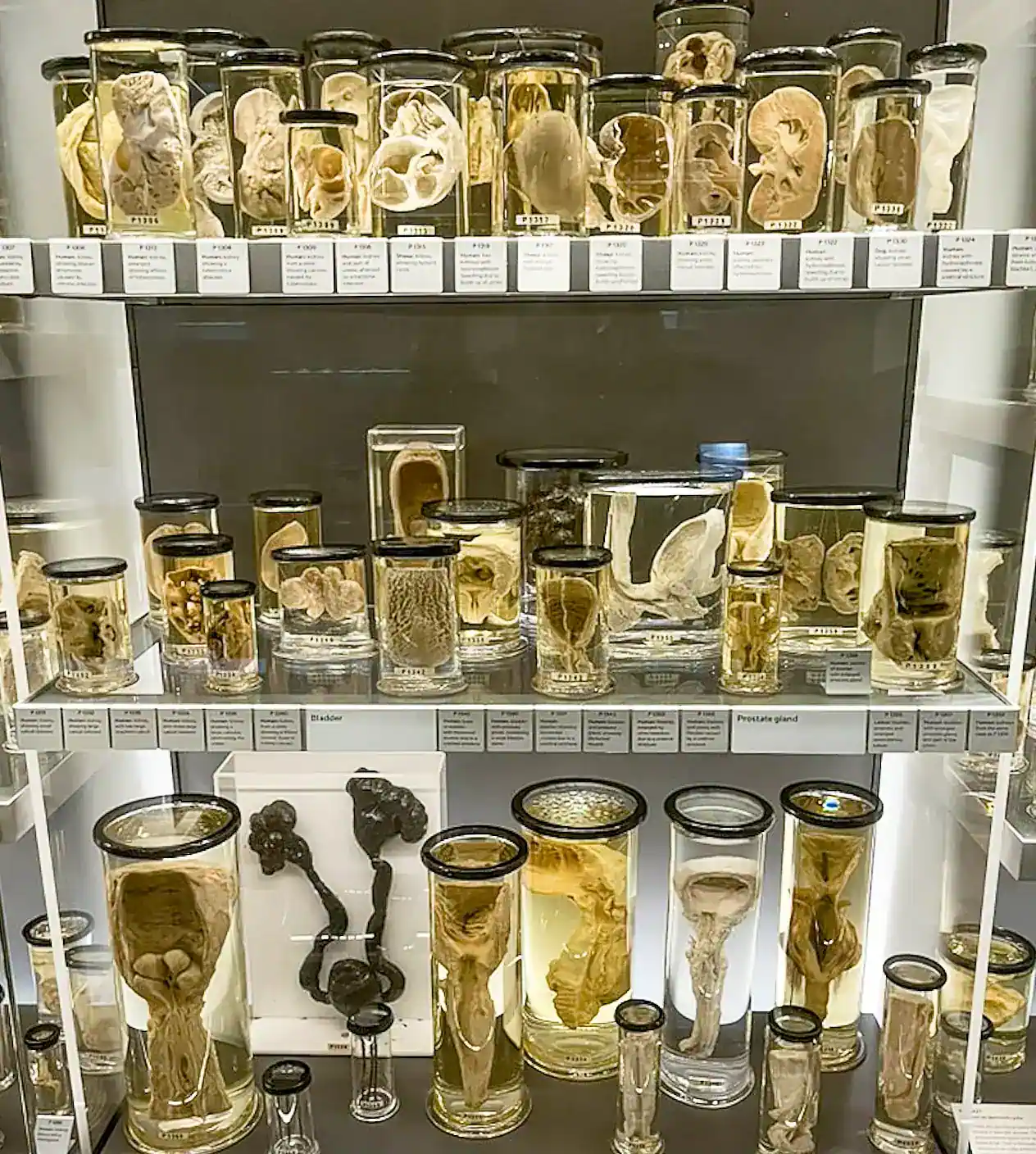 Photo: londondrum.com
After you’ve gone through his biography you’re on to a horror show of human remains. We’re talking pickled heads, hearts, lungs and brains – the kind of images that your mind will conjure up when you’re trying to fall asleep. (I don’t recommend this museum for kids.) One particularly gruesome display has a succession of foetuses in a jar. You can see their arms and legs stretching and bending into limbs and follow their features forming until they’re only days away from birth.
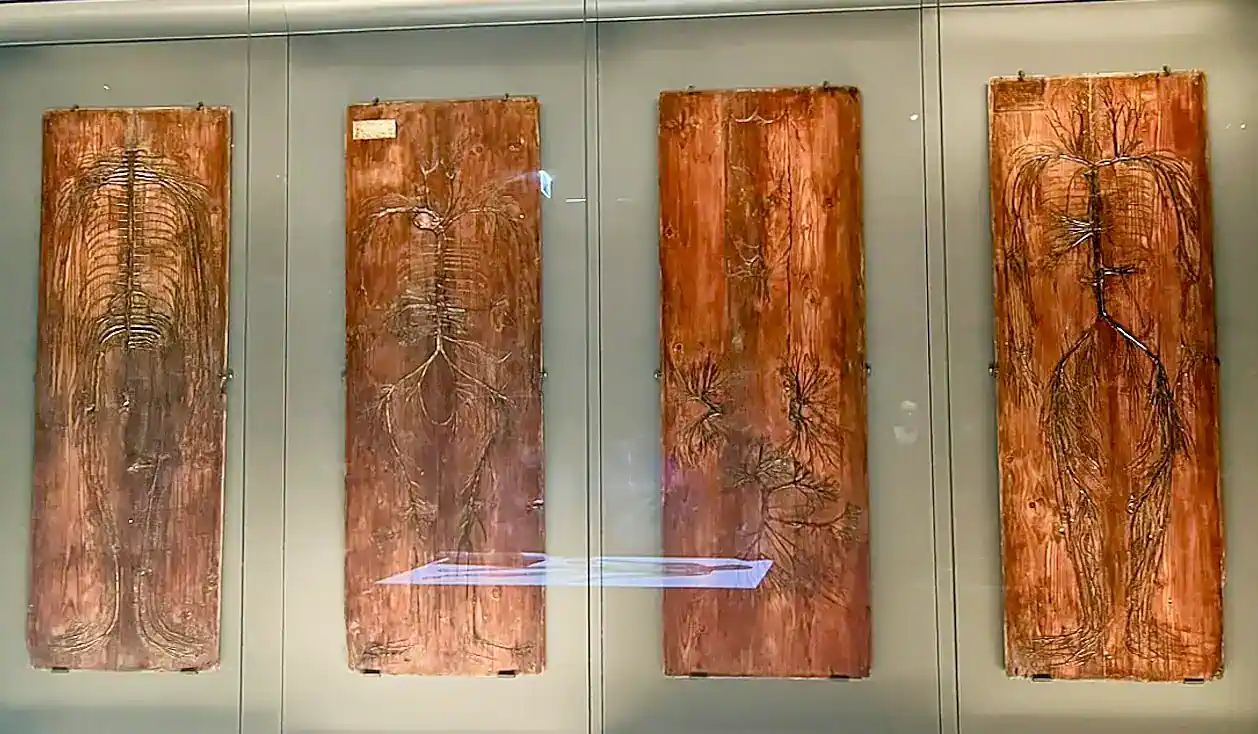 Photo: londondrum.com
The most historic objects are four blood-red slabs called the ‘Evelyn Tables’ – a dissected web of nerves, veins and vessels from a flayed person. If they put them up in the Tate then you might think they were by Francis Bacon.
And it doesn’t skimp on the animals either. It starts off with some butterflies and seahorses, a few frogs, lizards and fish, but then you’re onto glass jars filled with spiders and snakes, huge hairless rats and the hairy head of a chimpanzee. The star exhibit is the severed head of Winnie the Pooh. I’m being serious! They’ve got the skull of the celebrity bear that inspired AA Milne to write his children’s tale.
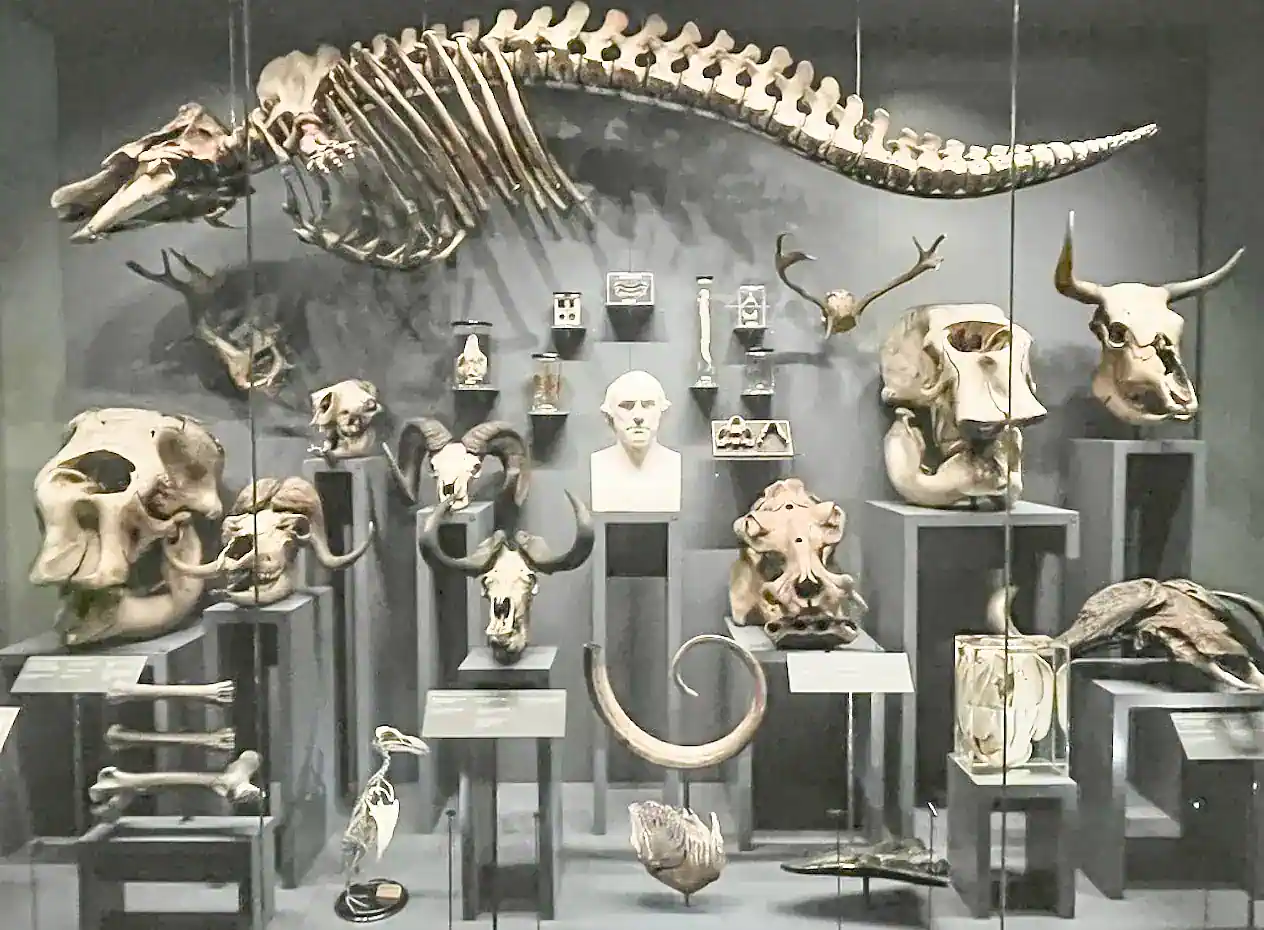 Photo: londondrum.com
Along the way you’ll find lots of interesting little exhibits like a set of dentures worn by Winston Churchill during World War II, a necklace of human teeth once owned by the explorer Henry Morton Stanley, and a box of glass eyes that look like a tray of children’s marbles.
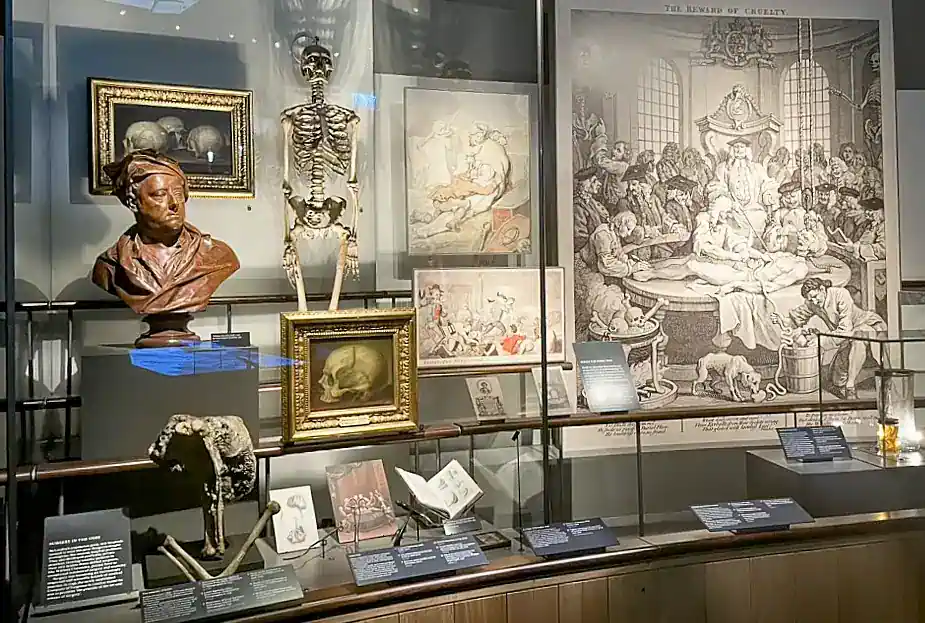 Photo: londondrum.com
It all sounds rather gruesome but bizarrely the displays are also rather wonderful to look at – the spotlights bring out the oranges, yellows and reds and turn the body parts into works of art. There’s also quite a lot of real art as well – old portraits of people and scenes from the 18th-century.

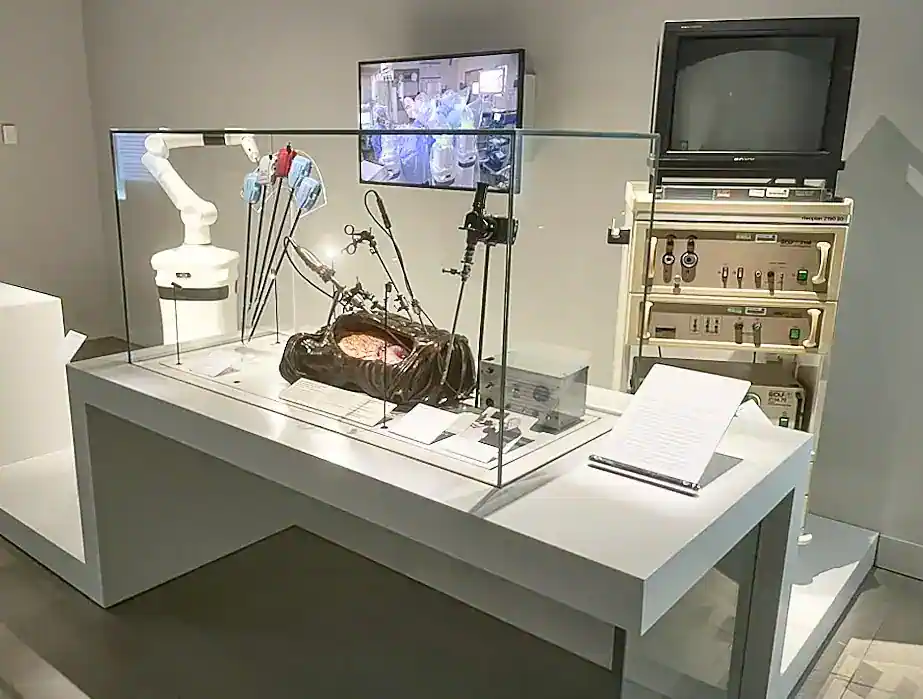 Photo: londondrum.com
The second half of the museum is more clinical with a few rooms of modern medical equipment where you’ll see lots of needles, scissors and knives, microscopes and X-ray machines that trace the history of surgery from ancient times to the present day.
I see this place as an adult companion to the Natural History Museum, because that place presents the animals with their clothes still on (with their fur and feathers intact), whilst the Hunterian strips them of their skin to reveal their muscles, blood and bones.

 London Squire guidebook – Check out my guidebook available to buy at Amazon, Apple and Kobo. I’ve personally visited 210 London landmarks, attractions and hotels and collected all of my reviews, example itineraries, handy practical info, and advice about using the buses and trains into an eBook, along with 675 original photos





Need some more ideas? Browse things to do in London today, what’s on in London this weekend, things to do in London this week, London events this November and Holborn events
What do you think? (1)
Ask a question, or share your experience of the Hunterian Museum
emma I have an interest in biology and medicine so I have always wanted to visit the Hunterian Museum and it didn’t disappoint me. It has a wonderful collection of specimens and interesting medical equipment. I recommend a visit. (reply)
Leave a comment (no need to register)
Forum - Landmarks, Attractions & Events