 Photo: londondrum.com
Useful things to know before your visit
Address: St. Magnus-the-Martyr, Lower Thames Street, The City EC3R 6DN. Website: stmagnusmartyr.org
How much do the tickets cost?
St. Magnus-the-Martyr is free.
What are the opening hours?
Opening times are 10am to 4pm (Tue-Fri); 10am to 1pm (Sun).
How much time do you need?
A typical visit to St. Magnus-the-Martyr takes 20 minutes.
Which buses go to St. Magnus-the-Martyr?
Bus routes 17, 21, 35, 40, 43, 47, 48, 133, 141, 149 and 521 all stop close by.
Which is the closest train station?
The nearest station is Monument, which connects with the Circle and District lines. It only takes two minutes to walk to St. Magnus-the-Martyr.
Which other attractions are nearby?
These attractions are all within 15 minutes walk of St. Magnus-the-Martyr: The Monument, Billingsgate Roman House & Baths, Sky Garden, Leadenhall Market, All Hallows-by-the-Tower, London Mithraeum, Clink Prison Museum, Golden Hinde, HMS Belfast, Royal Exchange, Mansion House, Old Operating Theatre, The Shard, Borough Market and Bank of England Museum.
 Twitter
 Facebook
 WhatsApp
 Email
My review of St. Magnus-the-Martyr
Have you ever seen a picture of London Bridge? And I don’t mean the modern one that leads up to The Shard, I mean that fantastic medieval one that stood for 600 years. Imagine picking up a shopping street and dropping it across the river, then lining the sides with waterwheels, overhanging houses, an elaborate chapel, and a stone tower spiked with the severed heads of the city’s traitors. That, my friend, is what I’m talking about when I say London Bridge.
St. Magnus-the-Martyr used to stand at the City end of it, about 300 yards away from Thomas Farriner’s bakery in Pudding Lane, which unfortunately meant it was one of the very first buildings to burn up in the Great Fire of London. Christopher Wren’s rebuild survived another blaze in 1725 which took out the houses on the south-side of the stone gate, but that was the beginning of the end for the occupied bridge. Within a decade the replacement houses were beginning to subside so the City of London Corporation decided to demolish all of the remaining buildings and widen the roadway.
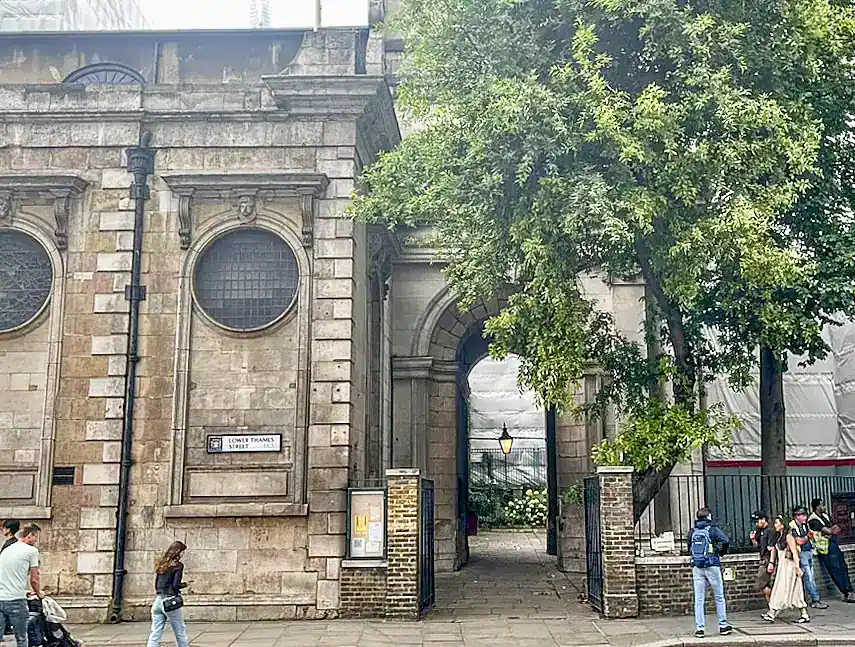 Photo: londondrum.com
St Magnus then found itself blocking the newly-laid pavement so they punched an arch through the bottom of the tower for people to walk through. So when you enter the church today you’re actually walking where the bridge pavement used to be, and that clock would have been hanging over the roadway.
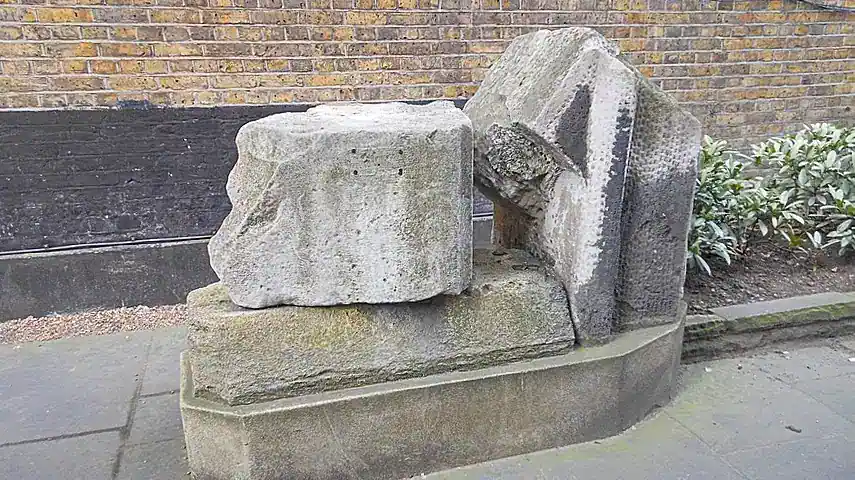 Photo: londondrum.com
The final blow came in 1830 when the Victorians demolished the entire bridge and built a new one slightly further upstream. Two of the salvaged stones can still be seen in the churchyard (there’s also a fossilised chunk of timber that archaeologists pulled out of the old Roman quayside).
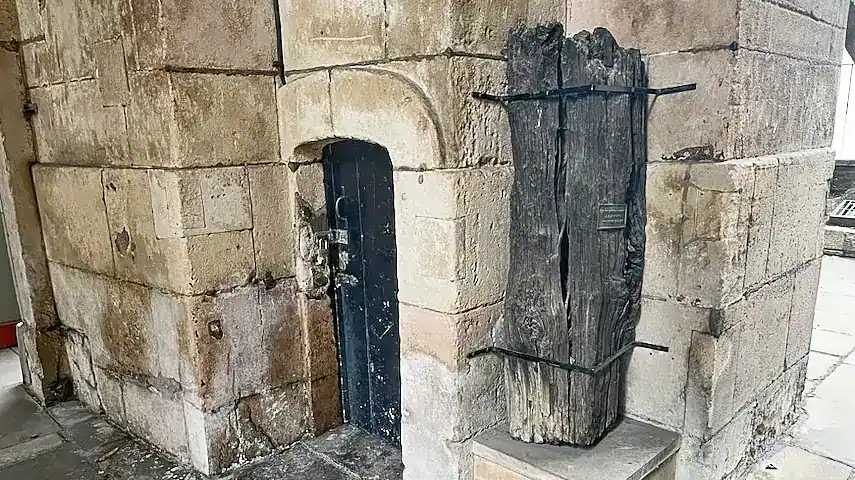 Photo: londondrum.com
But that’s not quite the end of the story because in the 1970s this Victorian bridge was sold-off to an American entrepreneur and re-erected in Arizona, and replaced with the plain one that we see today. (It’s hard to keep track of all these bridges!)
The model of Old London Bridge inside the church
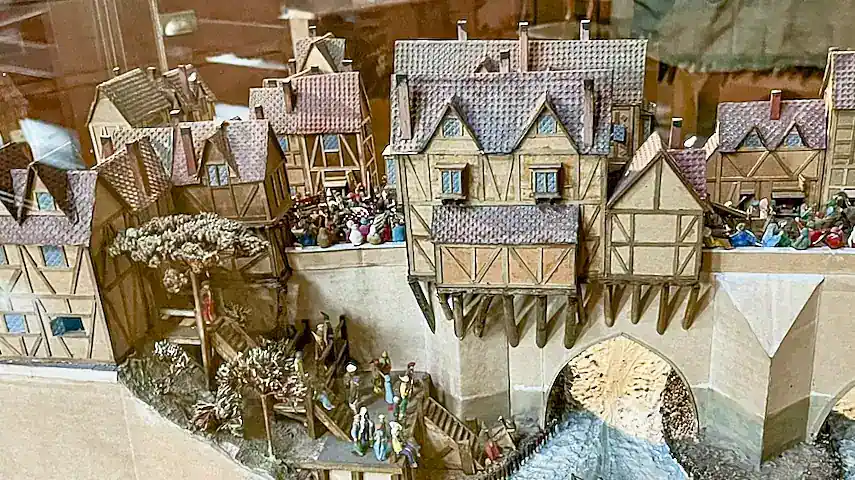
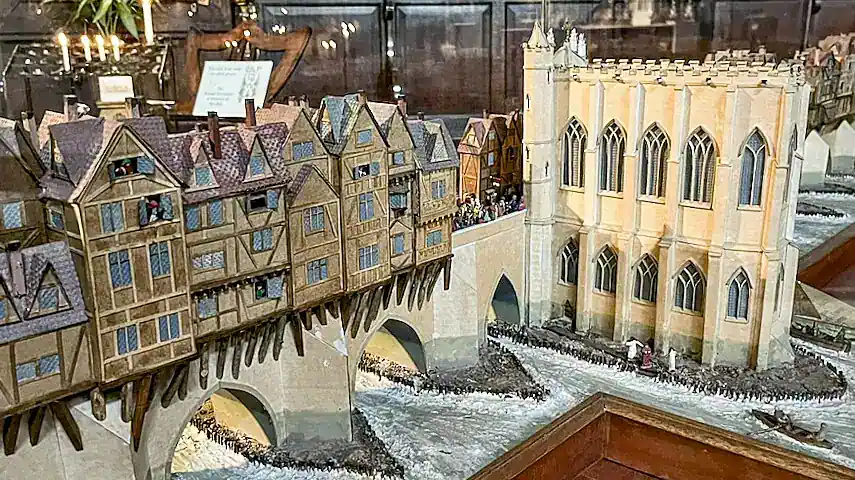
So why am I telling you all of this anyway, when we’re supposed to be visiting the church? Well that’s because there’s an intricate model of it just inside the front door.
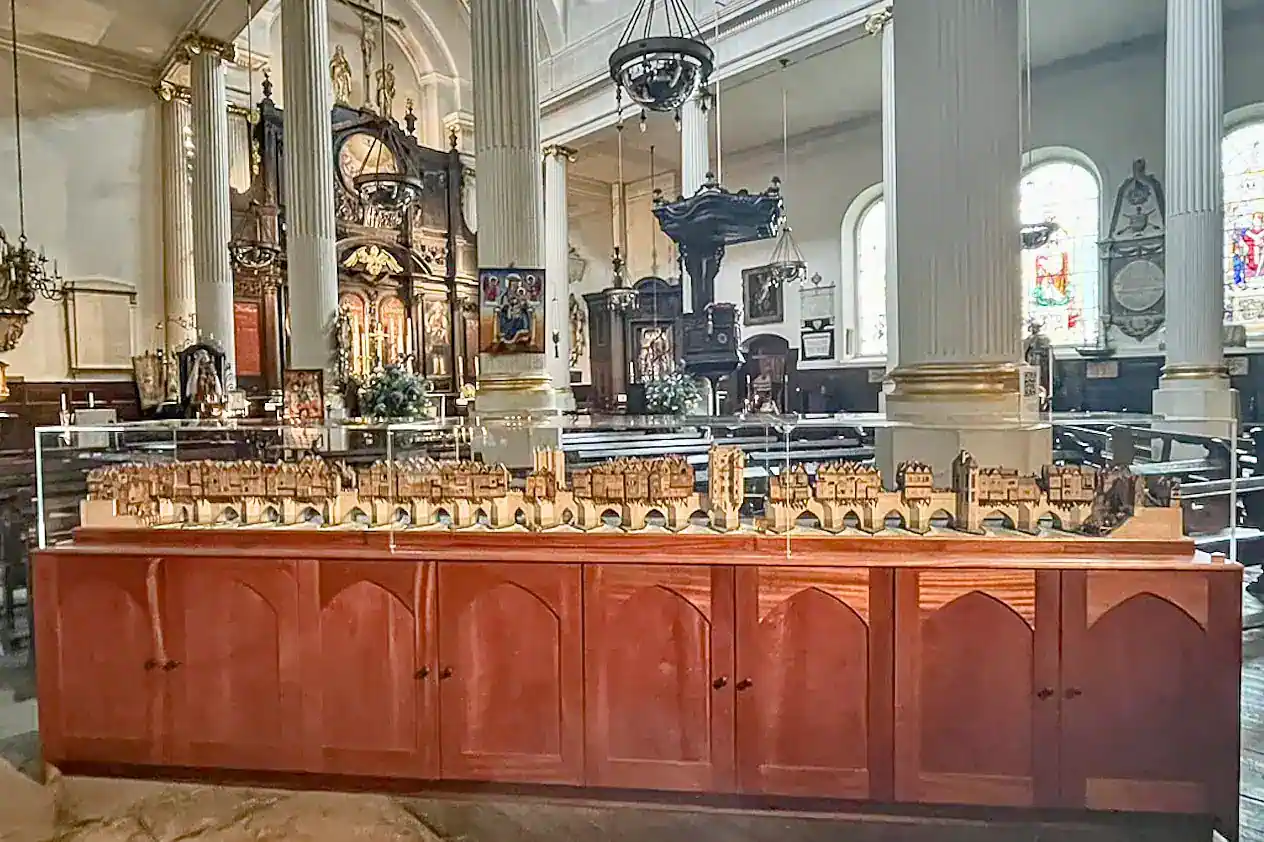 Photo: londondrum.com
The detail is amazing – check out the water wheels, the stone gate, the defensive drawbridge, Thomas Becket’s chapel halfway along, and the 100-or-so houses that line either side. By the 17th-century almost all of those houses had grown to be four or five storeys high and some were even up to six, making them taller than lots of offices in the City!
 |
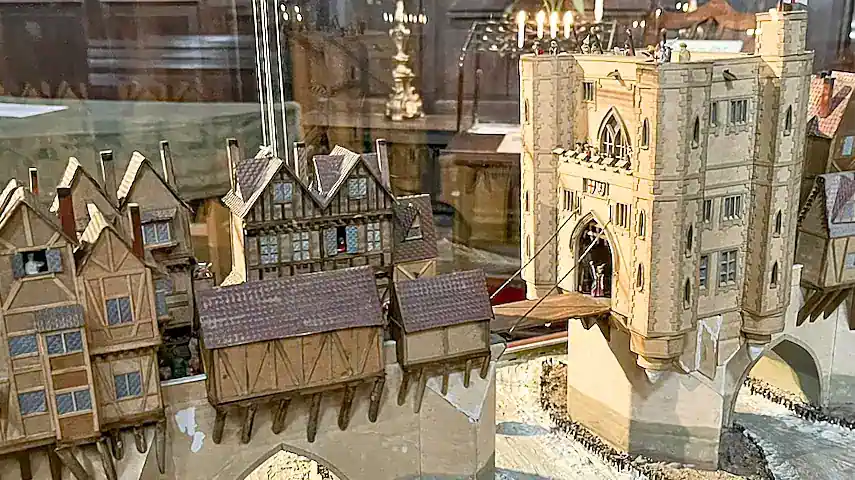  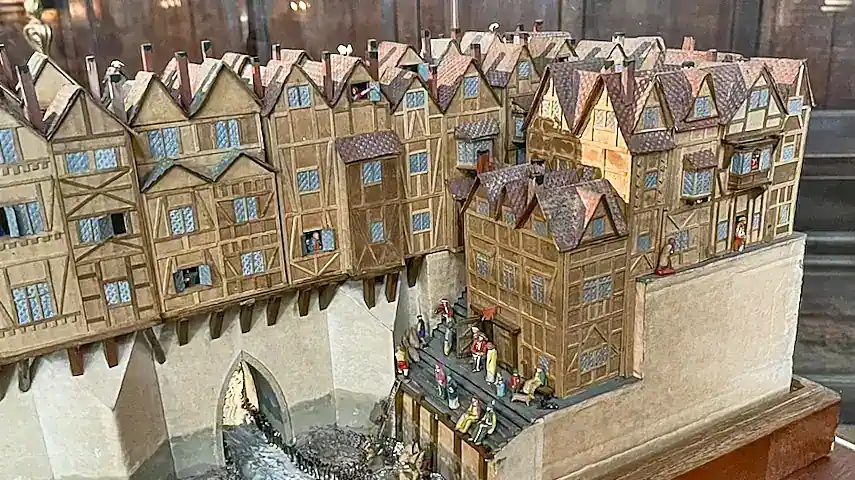 |
As the only fixed bridge into London it was almost always clogged with carts, cattle and wagons and there are over nine hundred people crowding down it, buying items from the cutlers, glovers, bowyers, fletchers, booksellers, metalworkers, needle makers, pin makers and haberdashers. It’s even got people hanging out of the windows to cheer Henry V as he processes towards the City.
The model also gives you a good idea of the raging water that roared through the arches creating terrifying rapids that daredevils would try and ride, only to be overturned and drown. You can see one of those daredevils getting ready to brave it at the end.

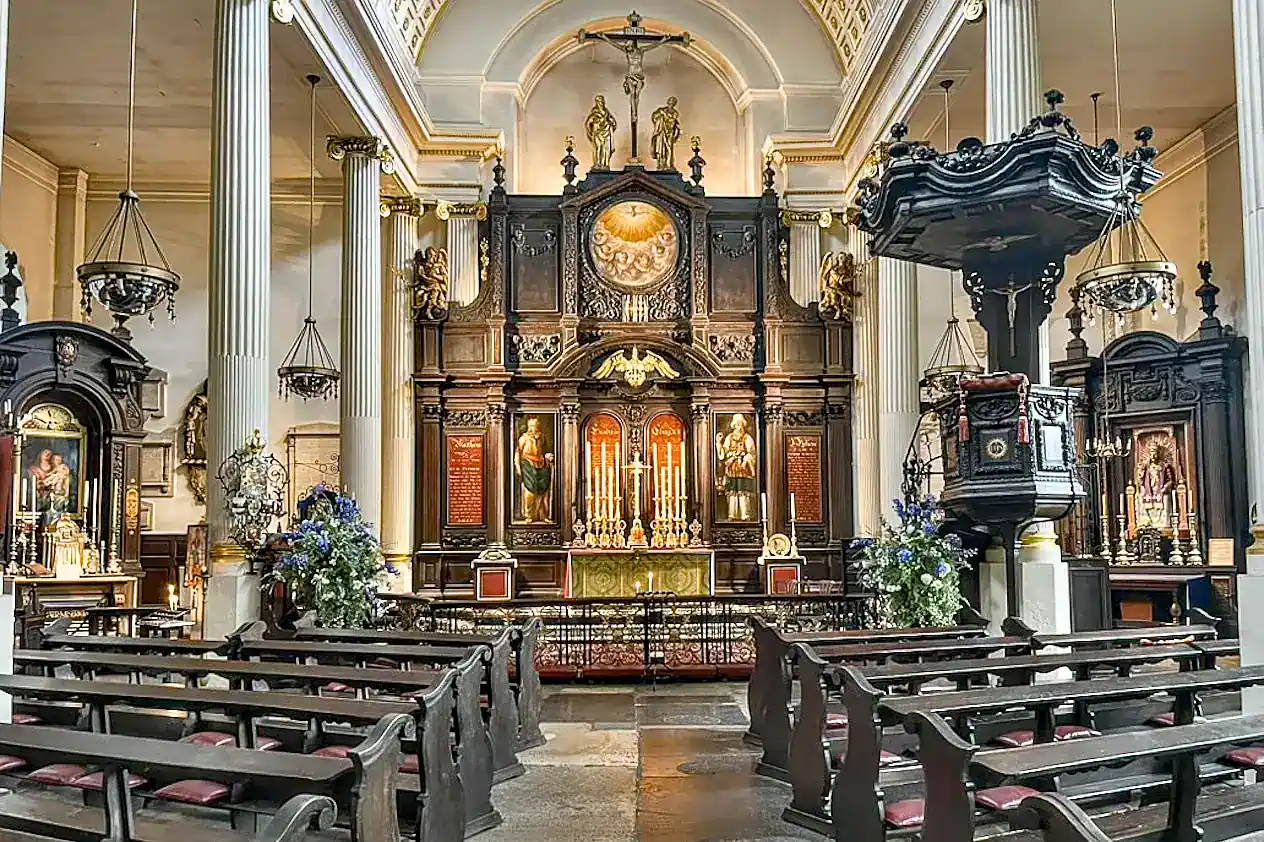 Photo: londondrum.com
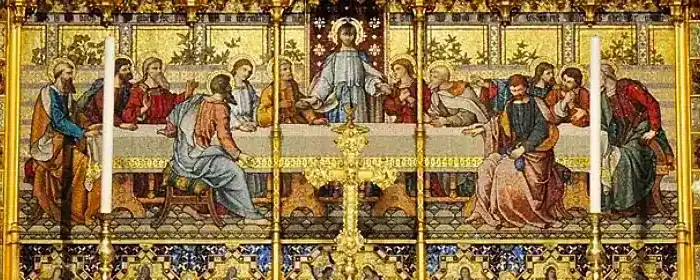
The church organ, altar and stained-glass windows
The rest of the church is also rather wonderful with flowers around the pulpit, Romanesque columns edged in gold, and an old organ case that’s supposed to be one of the finest surviving examples of Grinling Gibbons’ school of carving. When I visited this morning the whole place was filled with a smoky incense smell like a perfumed fog, and the background sound of musical monks on the very edge of hearing – the kind of quiet that you only seem to get inside religious buildings.
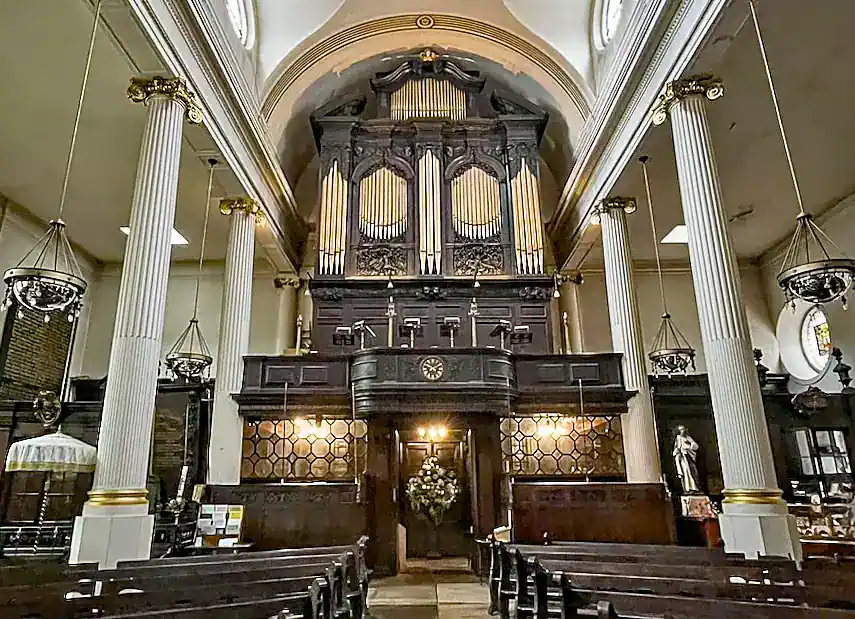 Photo: londondrum.com
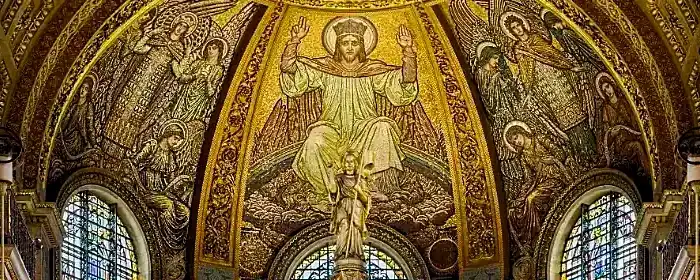
Take a close look at the stained glass windows and you’ll see some pictures of London’s lost churches. They’ve got St. Margaret’s in New Fish Street (where The Monument now stands), St. Michael’s in Crooked Lane (demolished to make way for King William Street), and Thomas Becket’s chapel that is on that model of London Bridge.

 London Squire guidebook – Check out my guidebook available to buy at Amazon, Apple and Kobo. I’ve personally visited 210 London landmarks, attractions and hotels and collected all of my reviews, example itineraries, handy practical info, and advice about using the buses and trains into an eBook, along with 675 original photos
More articles and events


What do you think? (2)
Ask a question, or share your experience of St. Magnus-the-Martyr
jon A very interesting and beautiful little church that is full of history. I have been to worship here many times when I was living in London. (reply)
Benjo I enjoyed the detailed model of London Bridge and didn’t know it existed. Thank you. (reply)
Leave a comment (no need to register)
Forum - Landmarks, Attractions & Events