 Photo: londondrum.com
Useful things to know before your visit
Address: British Library, 96 Euston Road, St. Pancras NW1 2DB. Telephone: 0193 754 6654. Website: bl.uk
How much do the tickets cost?
The British Library is free.
What are the opening hours?
Opening times are 9.30am to 8pm (Mon-Thu); 9.30am to 6pm (Fri); 9.30am to 5pm (Sat); 11am to 5pm (Sun).
How much time do you need?
A typical visit to the British Library takes 1 hour.
Which buses go to the British Library?
Bus routes 10, 30, 59, 63, 73 and 91 all stop close by.
Which is the closest train station?
The nearest station is King’s Cross St. Pancras, which connects with the Circle Hammersmith & City Metropolitan Northern Piccadilly and Victoria lines. It also serves National Rail trains. It only takes three minutes to walk to the British Library.
 Twitter
 Facebook
 WhatsApp
 Email
My review of the British Library
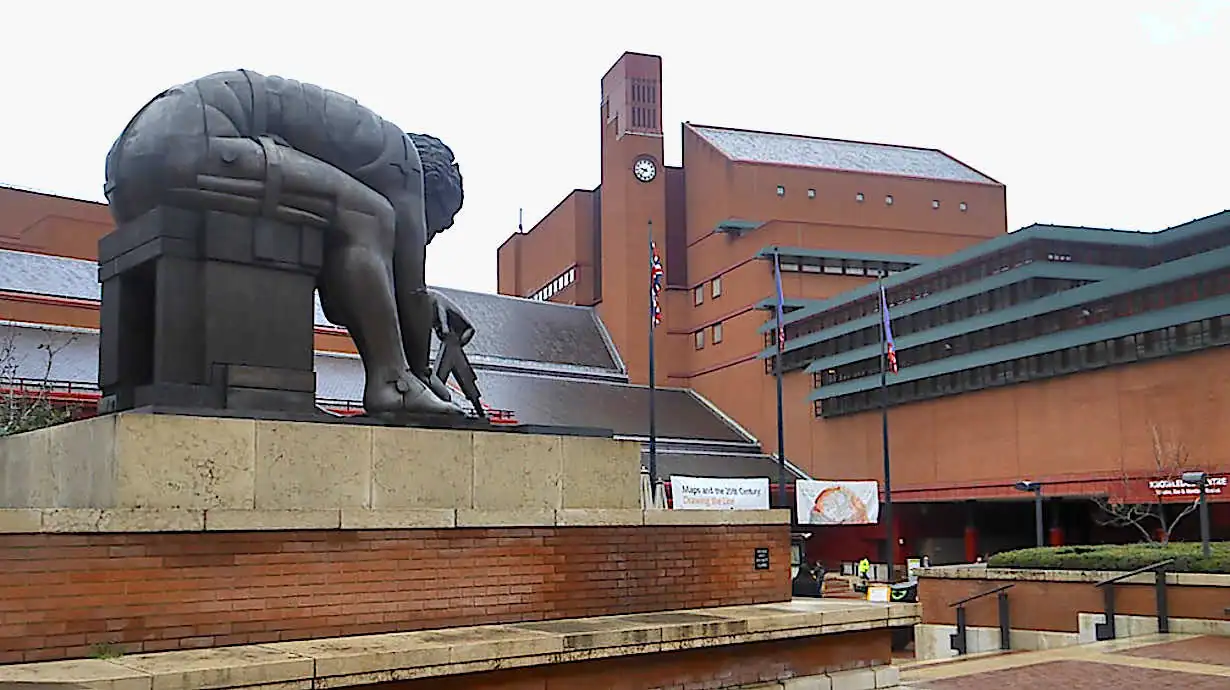
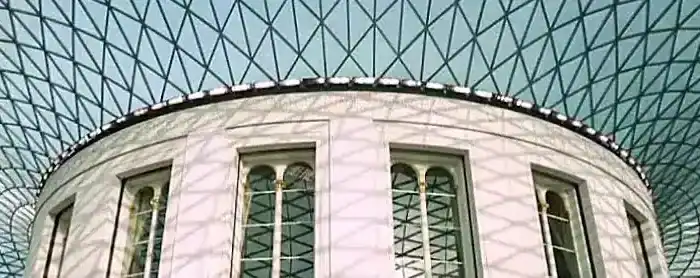
If the Victorians had built the British Library 150 years ago then I’m guessing it would have looked as good as St Pancras Chambers next-door, but, alas, we built it ourselves, so we ended up with this big pile of bricks instead.
The last time I went to a library I was still a little kid reading books about dinosaurs whilst my mum went through all the Mills & Boon, but this place isn’t like that. You can’t borrow a novel and then return it ten years later for a 20p fine. They’re got 14 million books on 180 miles of shelving in here, plus another 170 million more manuscripts, magazines, newspapers, maps and stamps – imagine trying to find what you want amongst all of that lot!
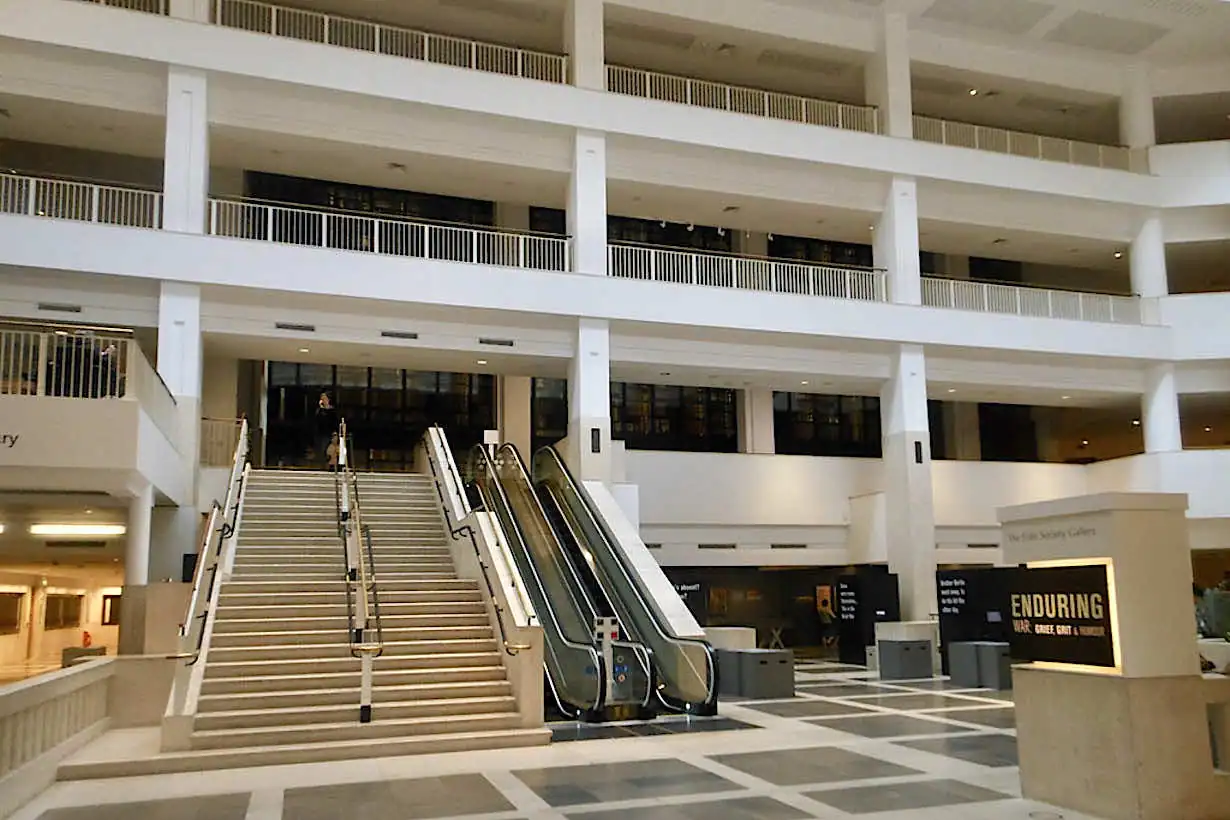 Photo: londondrum.com
That’s why if you want to read something you have to do a bit of form-filling and get hold of a Reader Pass beforehand (it’s a bit of a faff) – only researchers and students will do that. If you’re just a visitor then the only thing you can really do is head straight for the Treasures exhibition.
Treasures of the British Library Exhibition
It’s all very dark and quiet inside (and even a little reverential), full of dimly lit display cases with handwritten manuscripts by some of the most famous names in history. And when I say the most famous names in history that’s exactly what I mean: the first cabinet contains pages from Leonardo da Vinci’s notebook. After that you’ve got Chaucer’s Canterbury Tales, Shakespeare’s First Folio, and music manuscripts by the likes of Mozart, Beethoven and Bach.
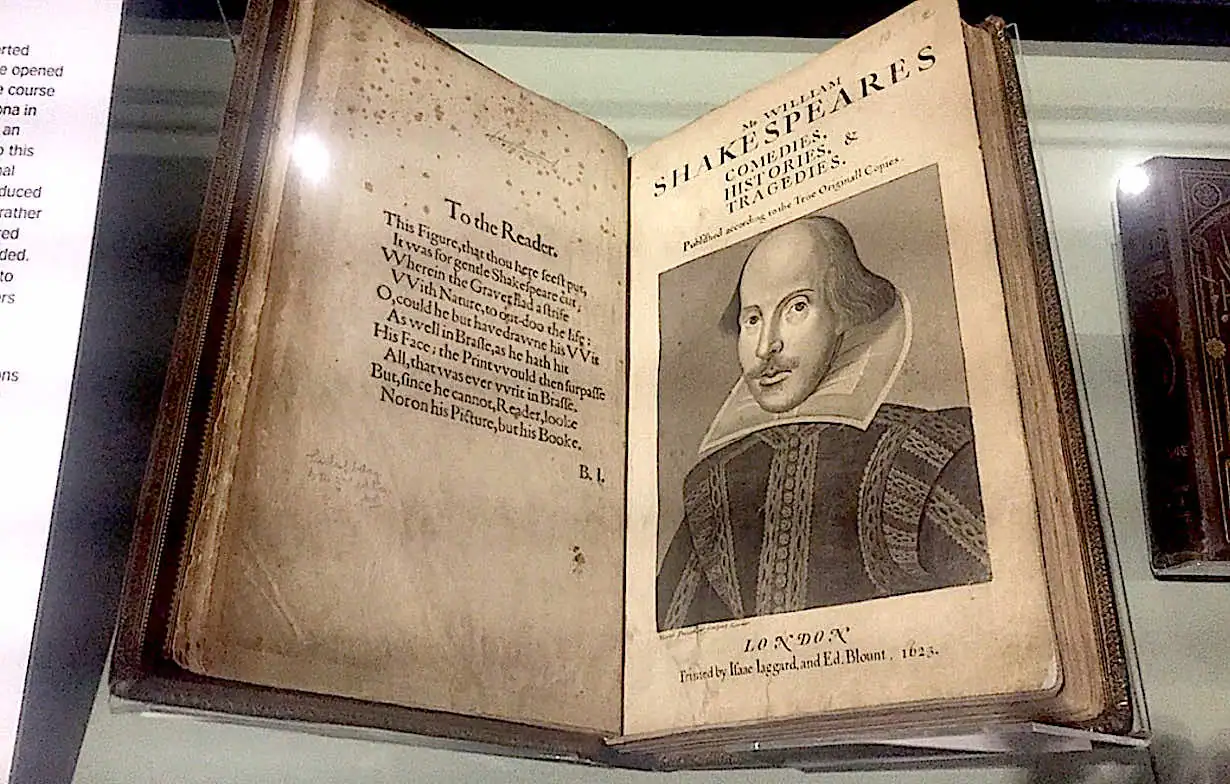 Photo: londondrum.com
It’s like the Westminster Abbey of words. Famous bones get buried in the Abbey and their faded papers come here.
There’s an historic letter from Henry VIII and Anne Boleyn, for example, begging Cardinal Wolsey to get a move on with his divorce, and Elizabeth I’s Tilbury speech that saw off the Spanish Armada. They’ve even got the prayer book that Lady Jane Grey carried to the scaffold on Tower Green.
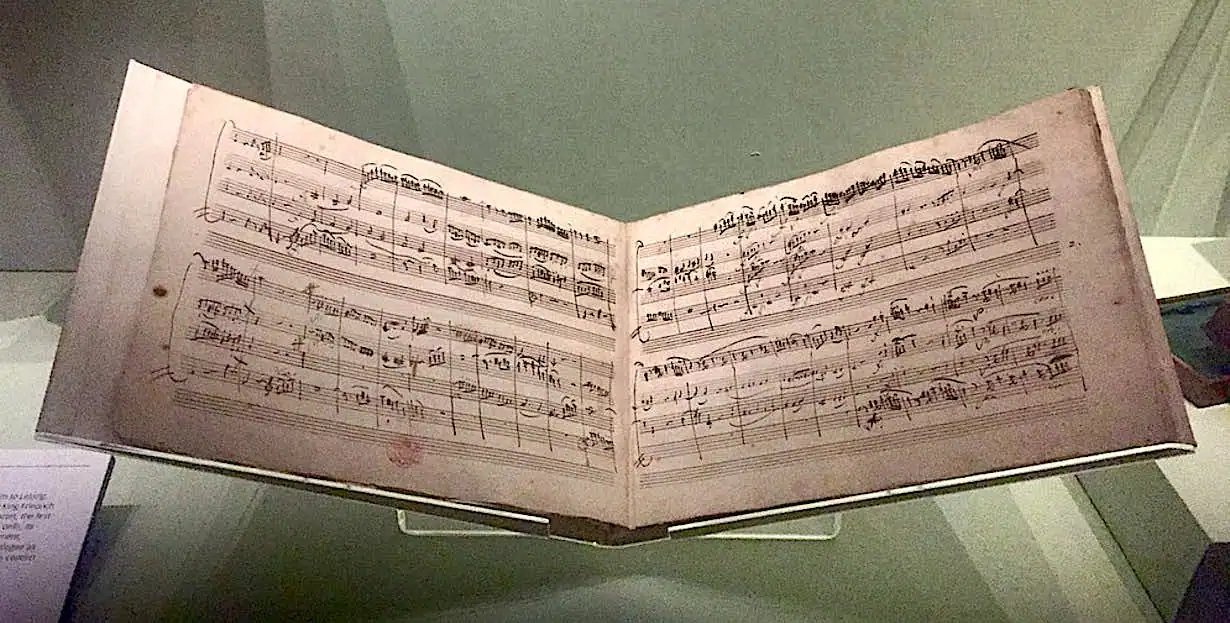 Photo: londondrum.com
Or how about a letter that Robert Cecil wrote after he uncovered the Gunpowder Plot? Or Oliver Cromwell’s reinforcement orders to Thomas Fairfax? Admiral Nelson’s battle plans that he wrote before the Battle of Trafalgar? Or the final lines from Captain Scott before he froze in the snow?
They’ve got lots of historic objects you’ll remember from school like the Anglo Saxon Chronicle, Domesday Book and King John’s Magna Carta – their spidery scrawls all barely legible in the illuminated gloom, making you feel as if you’ve maybe got another fifty years before they completely fade away out of existence.
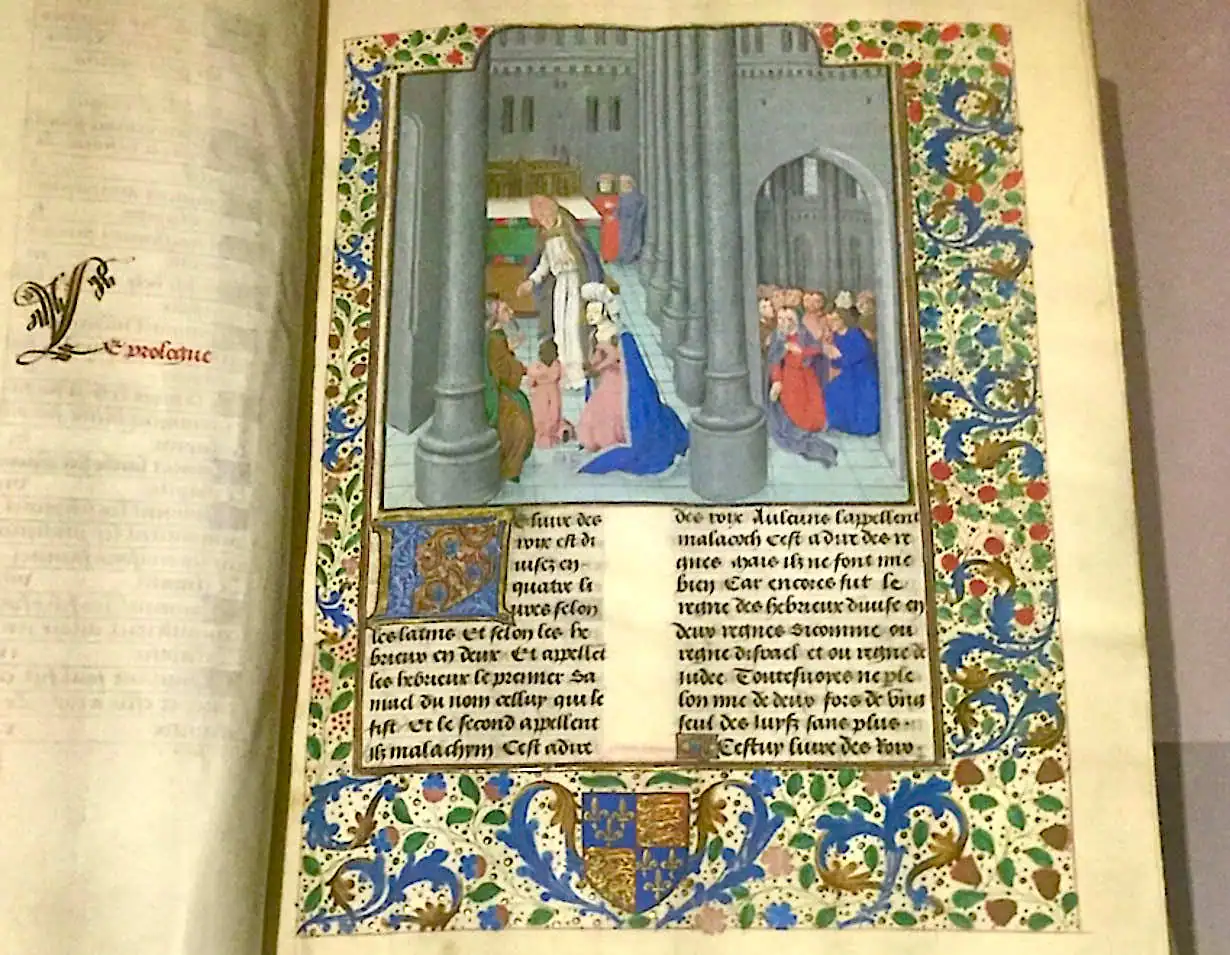 Photo: londondrum.com
The oldest items on show are Bible fragments from a few hundred years after Jesus, and huge illuminated scrolls by medieval monks, all beautifully decorated like stained glass windows on paper.

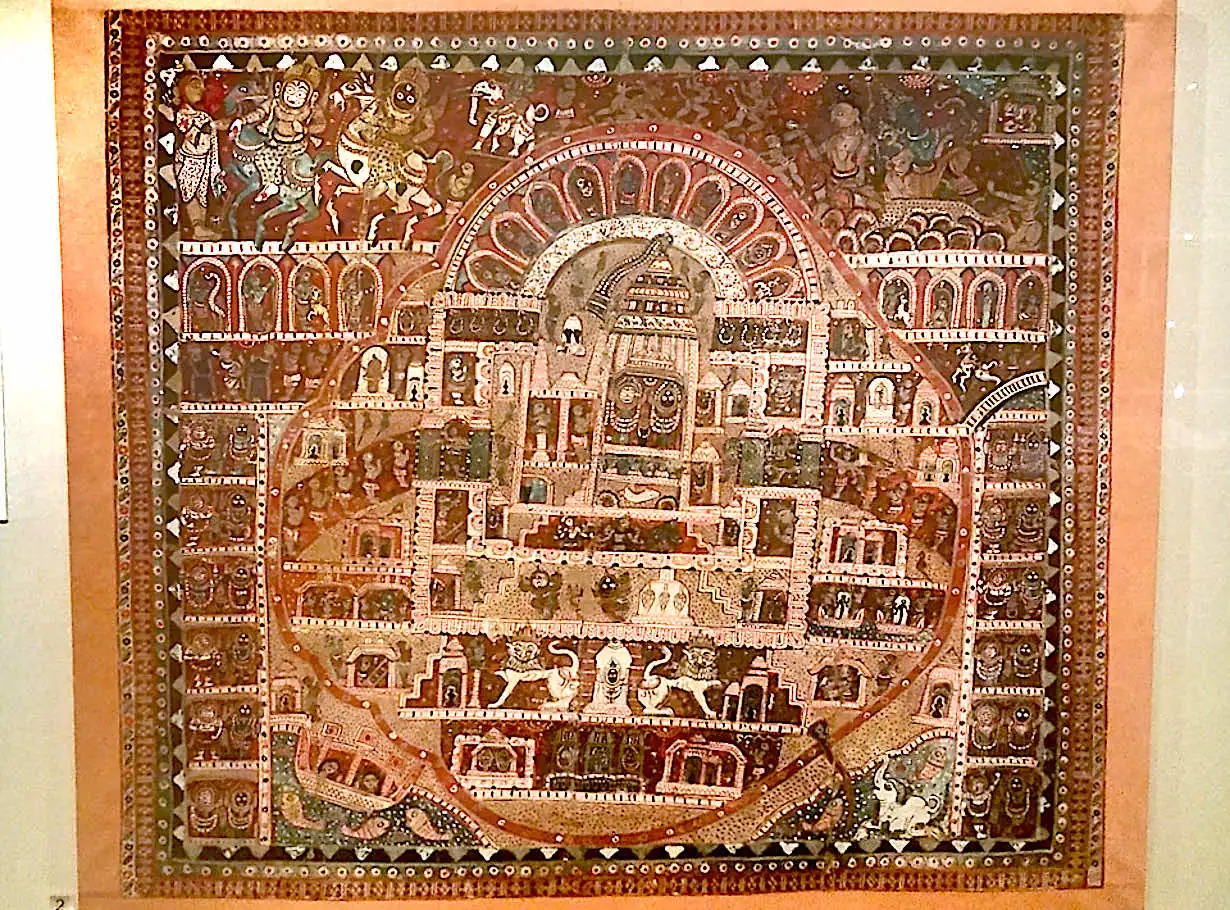 Photo: londondrum.com
(Bear in mind that they often swap out items for others, so you might end up seeing completely different things to me.)
British Library cafe
After the exhibition I always have a cup of tea in their dimly lit cafe. The guy next to me is completely lost in his novel whilst the lady opposite is trying to catch a cascading rainbow of Post-It notes falling out of her folders. All of the other faces are lit up by their laptops and I feel like I should be writing something too.
If you’re interested in English literature then you might like to visit Charles Dickens’ home where he wrote Oliver Twist, Dr. Johnson’s House where he wrote the first English dictionary and the fictitious Sherlock Holmes Museum at 221b Baker Street

 London Squire guidebook – Check out my guidebook available to buy at Amazon, Apple and Kobo. I’ve personally visited 210 London landmarks, attractions and hotels and collected all of my reviews, example itineraries, handy practical info, and advice about using the buses and trains into an eBook, along with 675 original photos

What do you think? (4)
Ask a question, or share your experience of the British Library
Alex Is it possible to borrow books from the British Library like a normal library? Can I go in there during my lunch break and pick something to read off the shelves? (reply)
Craig Hi Alex. It’s not like a normal library. If you want to read one of their books then you have to apply for a Reader Pass in advance, and once you’ve got that then you can request a book. They’re supposed to have a copy of every book in the country, so they’ve got miles and miles of shelves underground and every time you request a book they have to go and find it for you and bring it up. But you can’t take it away with you, like a normal library. You have to read it there. If you want to request a Reader Pass then there are some more details here – bl.uk/help/how-to-get-a-reader-pass (reply)
Niamh Hi, Does the library have some computers I can use to go on the internet? (reply)
Craig They’ve got computers in the Reading Rooms where you can search through the library’s database, use the library’s website, and some other relevant websites. Outside of the Reading Rooms they’ve got free WIFI you can use, but you’ll have to register for it and bring along your own laptop or tablet – bl.uk/help/wifi-guide (reply)
Leave a comment (no need to register)
Forum - Landmarks, Attractions & Events