 Photo: londondrum.com
Useful things to know before your visit
Address: Roman Bath, 5 Strand Lane (behind Surrey Street)
How much time do you need?
A typical visit to the Roman Bath takes 50 to 60 minutes in total for the entire walk.
Which buses go to the Roman Bath?
Bus routes 6, 9, 11, 13, 15, 23, 87, 91, 139 and 176 all stop close by.
Which is the closest train station?
The nearest station is Charing Cross, which connects with the Bakerloo and Northern lines. It also serves National Rail trains. You can walk the ½ mile to the Roman Bath in about 9 minutes.
Which other attractions are nearby?
These attractions are all within 15 minutes walk of the Roman Bath: Courtauld Gallery, Royal Courts of Justice, Temple Bar, Transport Museum, Hunterian Museum, Cleopatra’s Needle, Temple Church, Covent Garden, Lincoln’s Inn, Sir John Soane’s Museum, Hayward Gallery, Dr. Johnson’s House, Staple Inn and Benjamin Franklin House.
 Twitter
 Facebook
 WhatsApp
 Email
My review of the Roman Bath
Before you get too excited about the bath it’s not really Roman… but more on that later. The interesting thing about this place is not how old it is but how you find it, because there is absolutely no way that you can just stumble upon it by accident – somebody has to actually tell you where it is.
But there’s not a lot to see when you get there so I’m going to combine it with a few other bits and pieces and if you visit them all together then it turns into an interesting little walk.
The balcony at Adelphi Terrace
If you’ve seen some old paintings of York Water Gate in Victoria Embankment Gardens then you might remember the Adelphi towering over the top. When the Victorians pushed the river back 100 metres to create the Embankment it lost its riverside and today’s art-deco replacement has a nice little balcony overlooking the park. So that’s where we’re going first.
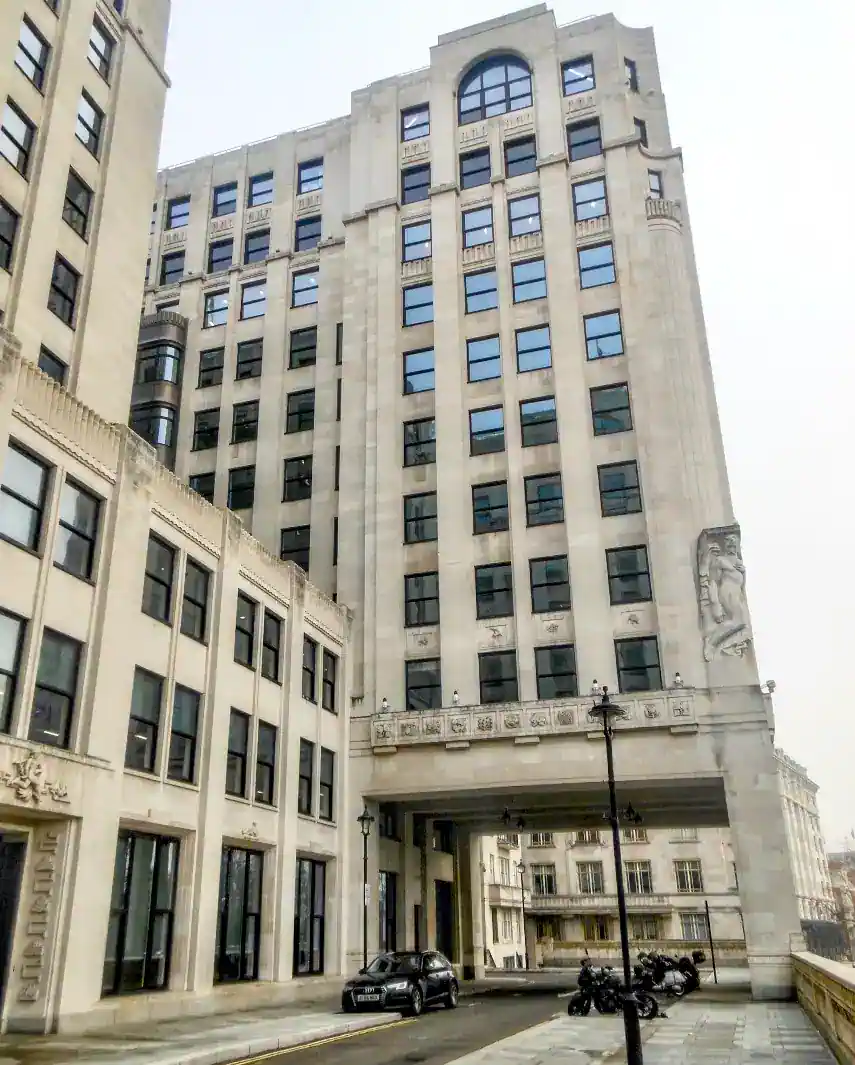 Photo: londondrum.com
What you need to do is start outside Charing Cross station and then head down the Strand. Turn right when you reach Adam Street and you’ll see the balcony wall at the far end. But before you get there have a look at the house at No.10.
Fake No.10 Downing Street in Adam Street
Does that front door seem familiar? It should do. Have another look. What does that remind you of? It’s No.10 Downing Street!
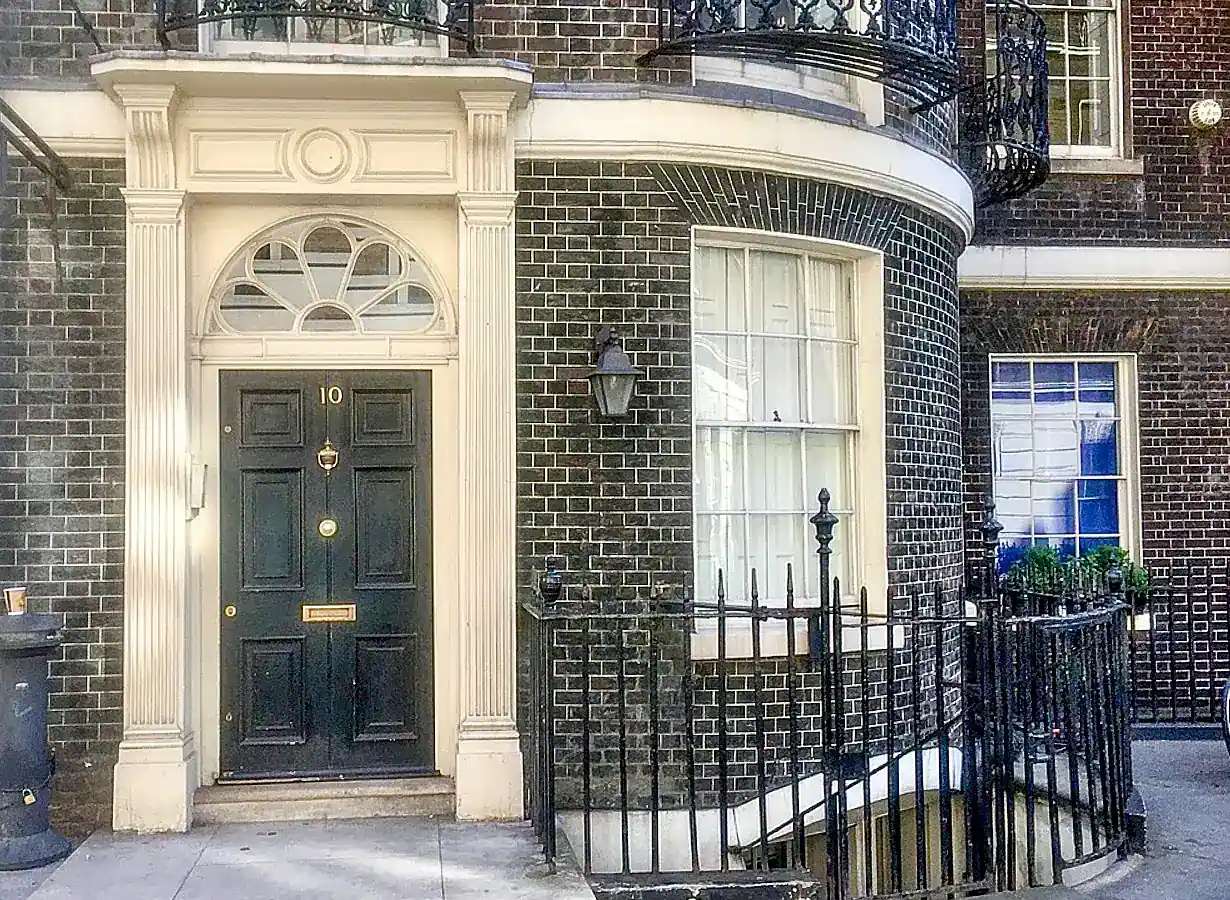 Photo: londondrum.com
Whenever somebody wants to fake a photoshoot outside Downing Street they always come here because most people won’t notice the difference. The only bits missing are the hanging lamplight across the top and the six-foot policeman on the doorstep.
Be mindful if you’re taking a selfie because the residents are probably fed up with tourists posing for photos outside their front door every five minutes.
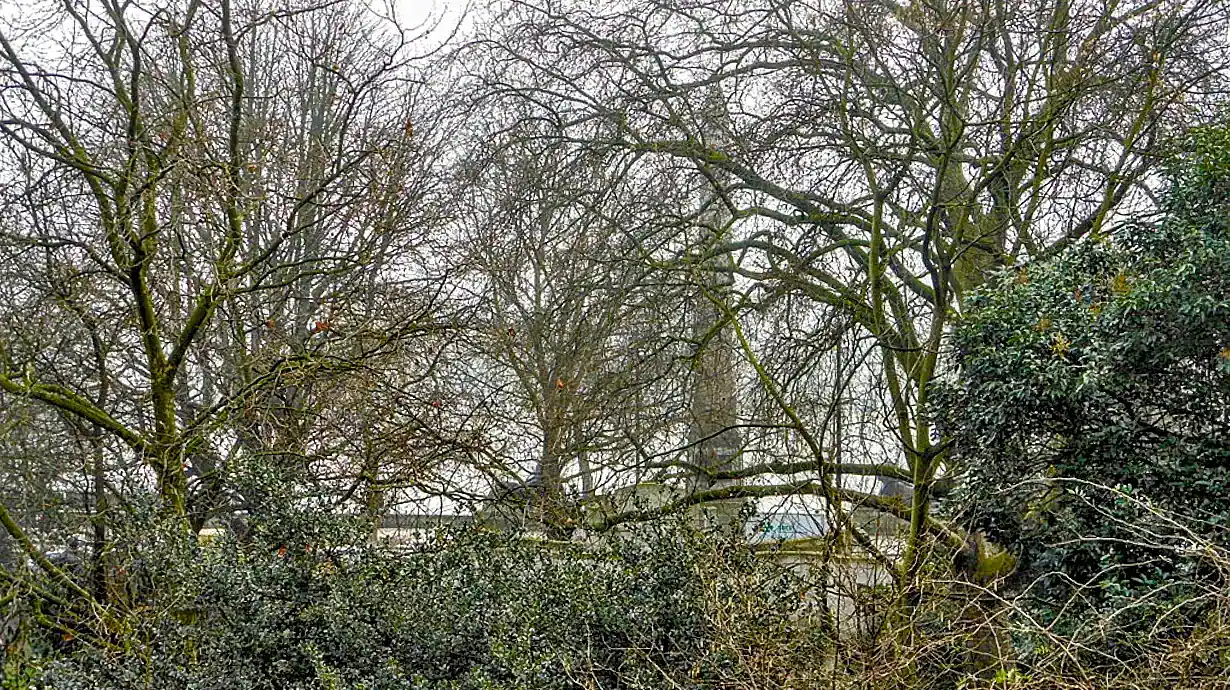 Photo: londondrum.com
Now walk to the end of Adam Street and you’ll be standing on that balcony I was talking about. You should be able to see Cleopatra’s Needle over the other side of the park if the trees aren’t too leafy.
Roman Bath in Strand Lane
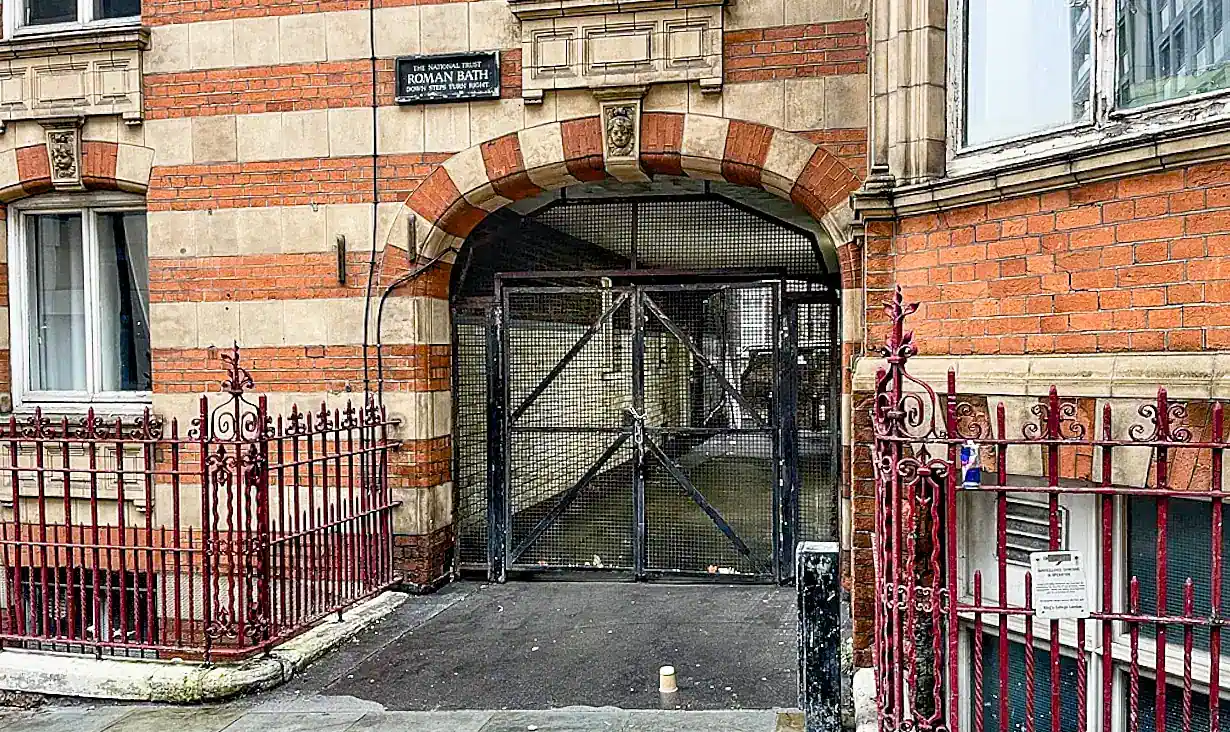 Photo: londondrum.com
Now double-back to the Strand and keep going all the way past Waterloo Bridge, past Somerset House and St. Mary-le-Strand, and turn right into Surrey Street. Along the righthand side you’ll see a stripy-bricked archway labelled ‘Roman Bath’. Head through there and turn right at the end. (If the archway is locked then keep walking to the end of the street and turn right and right again – you can enter Strand Lane from the other end.)

It’s sometimes a bit dark and deserted down here and you might worry about getting mugged but don’t worry, I promise you that it’s perfectly safe (probably). Look at it this way: you’re having an adventure! Not many tourists know about this place so you’re like Indiana Jones, skulking through the shadowy back alleys in search of ancient artefacts.
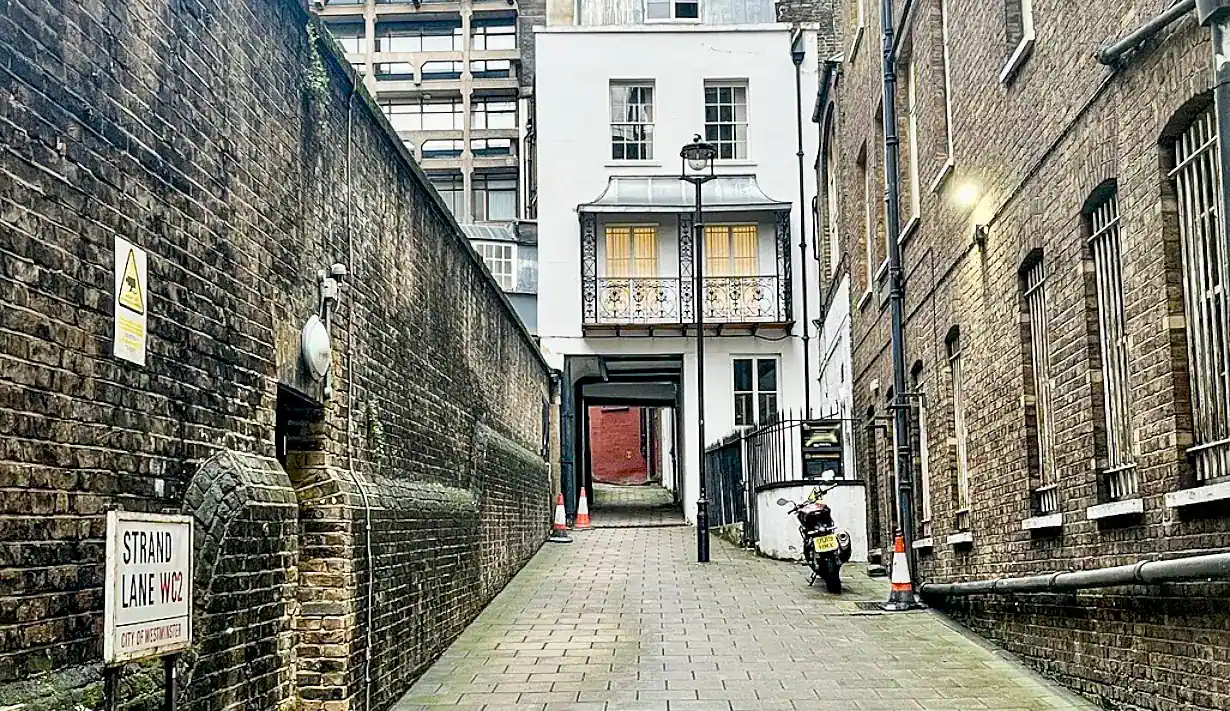 Photo: londondrum.com
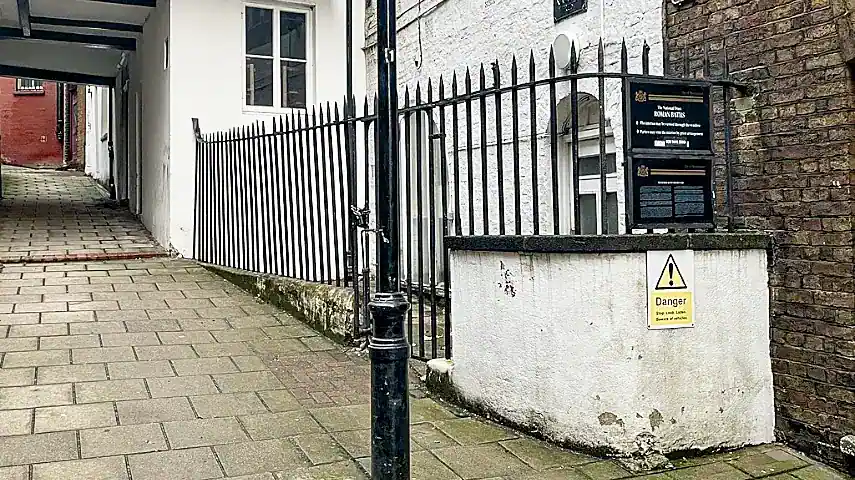
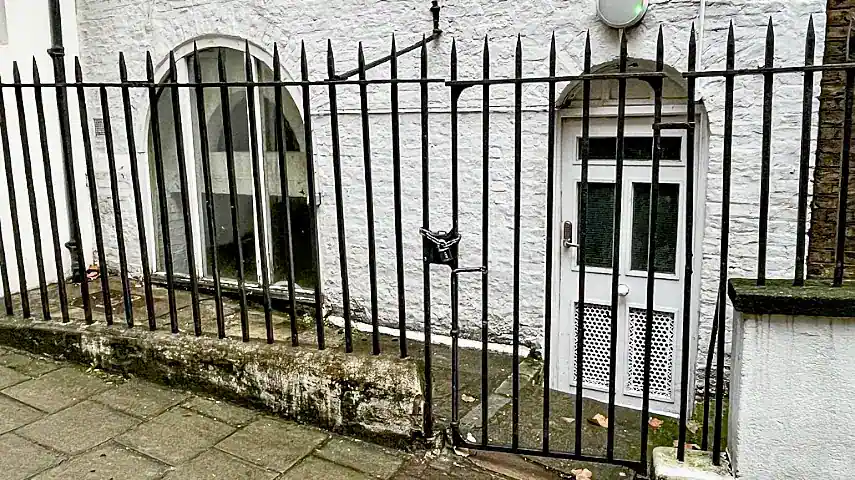
What you’re looking for is a white-framed window behind some iron railings. Push open the gate and have a peer through that arched window. What can you see? You might have to squint a bit through the curtain of condensation but hopefully you can make out a brick-lined hole in the floor (there’s a button on the wall which is supposed to switch on a light, but it never works when I try it). That’s the Roman bath. That’s what the sign says anyway. That’s how the 19th-century guidebooks describe it… only it isn’t, because it’s actually a 17th-century water cistern that fed the plants at Somerset House.
 |
 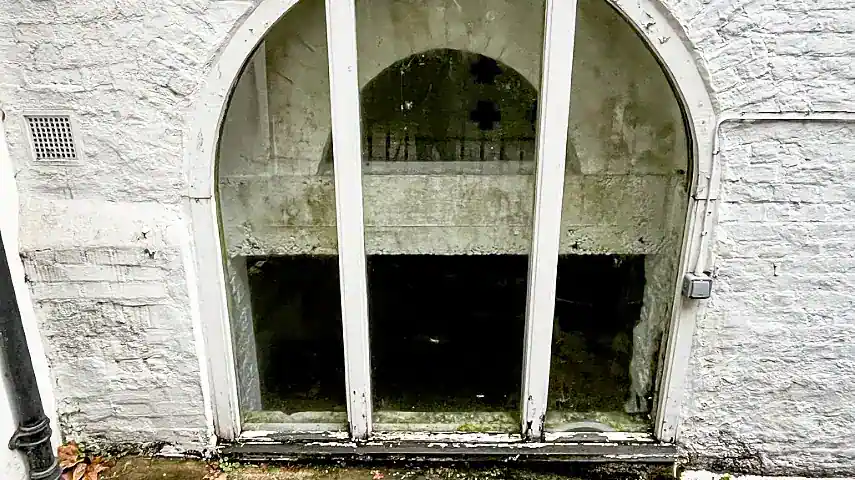 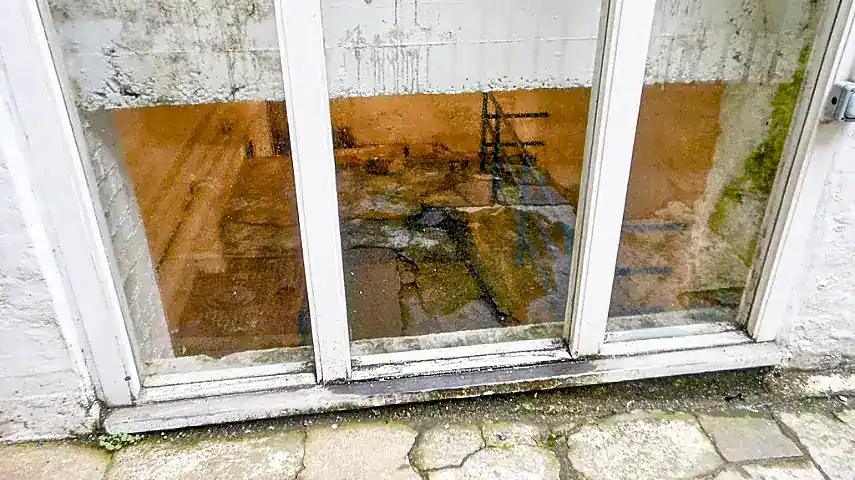 |

It was probably built in 1612 when James I had Inigo Jones refurbish the house for his queen, Anne of Denmark. He put in a pump that sucked up some water from a spring beneath 5 Strand Lane, and the reason they know it’s not Roman is because some of his original bricks still survive today. They also found some blue and white tiles that were added in the 1770s when it became a plunge pool for the public.
The story about its ancient origins began as an advertising gimmick when the owner of the plunge pool promoted it as an ‘Old Roman Spring Bath’. His little wheeze found its way onto different maps and pamphlets and even got a mention in Charles Dickens’ David Copperfield. It then became the accepted orthodoxy right up until the mid-20th century when some scholarly research revealed the truth.
Whitefriars Monastery in Magpie Alley
Now double-back onto the Strand and carry on walking in the same direction past St. Clement Danes, past the Royal Courts of Justice and Temple Bar, and turn right into Bouverie Street. Halfway along the left you’ll see Magpie Alley.
 Photo: londondrum.com
Most Londoners associate the name ‘Blackfriars’ with the busy train station and bridge, but it originally described the Dominican Friars whose priory survived until the Dissolution of the Monasteries in 1538. The White Friars had their own monastery right where you’re standing now, on the east bank of the long-gone River Fleet, until it was similarly dissolved by Henry VIII.

Their old church, chapter house, cloisters, garden and cemetery have all disappeared, but there’s still one tiny piece that has survived – the wall of a 14th-century vault that was discovered under 65 Fleet Street. When they put up a new building in 1991 they decided that the wall was in an awkward location and had the whole thing shifted across the street to Magpie Alley.
 Photo: londondrum.com
If you look over the black barrier at the end then you’ll see it preserved behind a big window. You can push open the heavy gate and walk down the stairs for a better view if you like (it looks as if you’re not supposed to go down there, but it’s okay).
It’s literally just a wall, nothing more than that. But it’s one more relic that you’d never know was there unless someone led you to it.

 London Squire guidebook – Check out my guidebook available to buy at Amazon, Apple and Kobo. I’ve personally visited 210 London landmarks, attractions and hotels and collected all of my reviews, example itineraries, handy practical info, and advice about using the buses and trains into an eBook, along with 675 original photos




Need some more ideas? Browse things to do in London today, what’s on in London this weekend, things to do in London this week and London events this November
What do you think? (1)
Ask a question, or share your experience of the Roman Bath
mlake I couldn’t get the light to work either and I couldn’t see hardly anything through the dirty window, they need to clean it up. (reply)
Leave a comment (no need to register)
Forum - Landmarks, Attractions & Events