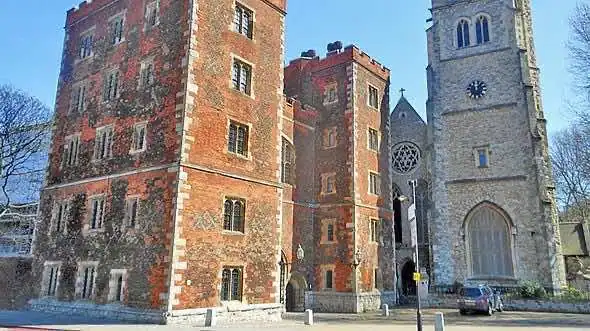
 Photo: londondrum.com
Useful things to know before your visit
Address: Garden Museum, Lambeth Palace Road, Lambeth SE1 7LB. Telephone: 0207 401 8865. Website: gardenmuseum.org
How much do the tickets cost?
You can buy adults tickets from £16, seniors from £13, and children (7-18 years) from £9. Children (under-7) are free. Family rates are available from £20 (1ad+1ch) and £40 (2ad+2ch).
What are the opening hours?
Opening times are 10am to 5pm (Mon-Sun). Last entry is 1 hour before closing time.
How much time do you need?
A typical visit to the Garden Museum takes 45 to 60 minutes.
Which buses go to the Garden Museum?
Bus routes 3, 344, 360, 507 and C10 all stop close by. Here are the London bus fares.
Which is the closest train station?
The nearest station is Lambeth North on the Bakerloo line. You can walk the ½ mile to the Garden Museum in about 9 minutes. Other stations within walking distance are Waterloo and Elephant & Castle. Here are the tube prices.
Which other attractions are nearby?
These attractions are all within 15 minutes walk of the Garden Museum: Jewel Tower, Houses of Parliament, Tate Britain, Big Ben, Westminster Abbey, SEA LIFE London Aquarium and Imperial War Museum.
 Twitter
 Facebook
 WhatsApp
 Email
My review of the Garden Museum
Lambeth Palace has been the official London residence of the Archbishop of Canterbury since the 12th-century and St. Mary-at-Lambeth is the church next-door (literally a stone’s throw from the Tudor gate) so back in its heyday it was one of the most prestigious parishes around.
 Photo: londondrum.com
Unfortunately its congregation dwindled down as the locals got pushed out by the shops and offices and in 1854 the churchyard was closed to burials. Bomb damage during the war hastened its decline and in 1972 they decided to deconsecrate and demolish it. They’d already started removing the pews when fans of the great gardener John Tradescant stepped in to save his grave, and turned the church into a museum.
 Photo: londondrum.com
 Photo: londondrum.com
If you’re into the history of gardening then there’s a lot to see and read, but if you’re here for the history of the church then they’ve cleaned most of it away – the stonework looks as if it’s been given an acidic whitewash, the stained-glass windows are half-hidden behind plain grey display cabinets, and the walls are blocked off by bland wooden stairwells.
Tomb of Captain William Bligh, from Mutiny on the Bounty
Even the churchyard out the back hasn’t escaped their green fingers because it’s like an overgrown jungle of shrubs and plants, boxed off by walls of glass. Only two tombs have come away unscathed and the rest have been turned into platforms for plant pots.
 Photo: londondrum.com
The first one is William Bligh – the infamous captain from Mutiny on the Bounty. When Fletcher Christian (Marlon Brando in the movie) forced him into a rowing boat he miraculously made it back to England and sent the Admiralty to apprehend the rebels who were busy bickering and picking each other off on Pitcairn Island.
After fighting alongside Nelson at the Battle of Copenhagen he managed to spark off another mutiny in Australia, got court-martialled twice, before finally retiring to the peace and quiet of St Mary’s graveyard (until it got turned into a cafe).
John Tradescant’s Tomb & Ark Gallery
 Photo: londondrum.com
The most important tomb in the churchyard – and the whole reason why the museum is here – is for the first great gardener in British history, John Tradescant. After working for the Earl of Salisbury at Hatfield House he travelled as far as the Arctic Circle to bring back plants for Charles I. In 1629 he started his own botanical garden so he could show off his collection of flora, fauna, art and ethnography from around the world.
When he died this ‘Ark’ was carted off to the Ashmolean but returned home when the church was turned into a museum. There’s not much of it left anymore – just some illustrated books, beads, necklaces, a couple of mummified mice, rock fossils and seashells – but it’s on display inside a tiny little room with some portraits of his family.
 Photo: londondrum.com
Upstairs is a much larger gallery of nature paintings, plans of parks and gardens, biographies of famous gardeners, and some old horticultural magazines signed by Alan Titchmarsh and Charlie Dimmock. They’ve also got a cabinet full of shovels, buckets, trowels, rakes and spades, and a display case of saws, shears, wheelbarrows and watering cans.
 |
   |
After that comes some stone gnomes, some gnarly old walking sticks, a couple of rusty old lawnmowers, some old greengrocer posters, and you can finish up by watching six clips of people talking about their sheds… whilst sitting inside a shed.
In summary then… the medieval church is a ghost of what it was, and the museum is all about historical gardening during the last 350 years. If you’re hoping for some plant seeds and gardening tips then you’re better off going to Wisley or Kew.

 London Squire guidebook – Check out my guidebook available to buy at Amazon, Apple and Kobo. I’ve personally visited 210 London landmarks, attractions and hotels and collected all of my reviews, example itineraries, handy practical info, and advice about using the buses and trains into an eBook, along with 675 original photos
More articles and events





Need some more ideas? Browse what’s on in London, what’s on in London today, things to do in London this weekend, what’s on in London this week, things to do in London this month and events in Lambeth
What do you think? (3)
Ask a question, or share your experience of the Garden Museum
Ron I’m not interested in visiting the museum, but can I still visit the cafe? (reply)
Craig Hi Ron. You can do, yes. You can visit the cafe without paying to get inside the museum. (reply)
Simon I enjoyed the museum and you can also climb up the church tower for a nice view over the river if you don’t mind climbing up 150 steps. (reply)
Leave a comment (no need to register)
Forum - Landmarks, Attractions & Events